

Dog Behavior Modification Essential Solutions that Work
Is your dog’s behavior becoming a challenge?
Who needs dog behavior modification?
If your dog is a little fluffy angel who hardly ever misbehaves then this article is not for you. Well done!
But if your dog is more of a rambunctious little rascal, pushing your patience to the brink every single day, then keep reading.
There are many reasons dogs have behavior issues. Many times you inherit these problems with the dog through improper socialization from the breeder or shelter, or it could even be health or genetic issues.
Whatever the reason for the behavior issue, it’s time to get it under control before it becomes a major problem. You’ll know if a behavior warrants help.
The reason puppies are so unbelievably cute is so you’ll be able to overlook their behavior issues.
We sometimes let our little dogs, like the Coton de Tulear, get away with mischievous or inappropriate behavior that we’d never tolerate from larger dogs.
This isn’t doing you or your small pup any favors. Behavior problems for puppies are pretty normal, but if you don't address them head-on, they can significantly impact the joy and harmony in your life.
Is your dog driving you crazy?
You may need dog behavior modification if your dog:
- Barks incessantly
- Acts aggressively toward you, your children, or other animals
- Becomes destructive every time you leave the house
- Chews or bites well past the teething stage

All of these behaviors are normal in
new puppies and easily corrected with training, patience, and socialization. Most often it’s the dog owner who needs to be trained more than the puppy. Are you enabling bad dog behavior?
The first step for dog behavior modification:
Before you can begin modifying your dog's behavior, it's important to understand why they are exhibiting these behaviors in the first place. Dogs may bark excessively out of boredom or anxiety, chew destructively due to teething or separation anxiety, or become aggressive due to fear or lack of socialization.
Other causes of fear include:
- inherited fears such as noise phobia (many dogs with noise phobia inherit this fear from their parents
- traumatic events such as bad veterinary experiences, being attacked by another dog, or being abandoned or neglected
- lack of socialization
- injury or illness
You can better address the issue by identifying the root cause of your dog's behavior and work towards a solution.
The most important thing you can do is let your dog know that he is safe and that you will take care of him. Much of fear-based behavior comes when dogs think they have to be the pack leader; this can be an enormous burden for them.
Let him know that you are a good leader and can take charge so he doesn't have to protect you and your home every minute of the day. Help him relax and enjoy his home instead of constantly trying to protect it.
Make sure everyone in the family is consistent with the training. If you are strict and consistent, but your spouse or kids let him get away with murder, you will have a very confused pet.
No dog comes into this world understanding what it takes to be a well-mannered part of your family. Successful dog behavior modification takes time, patience, training, and love.
What dog behavior modification issues are you dealing with?
Understanding Dog Behavior Modification - What is it?
Understanding Dog Behavior:
First things first, let's unravel the mystery behind dog behavior. Just like humans, dogs have unique personalities shaped by a combination of genetics and environment. From their playful antics to their occasional moments of mischief, everything they do results from this intricate mix. And guess what? That includes both good and not-so-good behaviors.
Now, when it comes to not-so-good behaviors, don't panic! It's important to remember that most dogs, including our beloved Cotons, can develop behavior problems. These can range from aggression and anxiety to separation anxiety and beyond.
So, what exactly is behavior modification?
It's a fancy term that essentially means shaping and altering your Coton's behavior in a positive way. And one of the most effective tools in your behavior modification arsenal is positive reinforcement training.
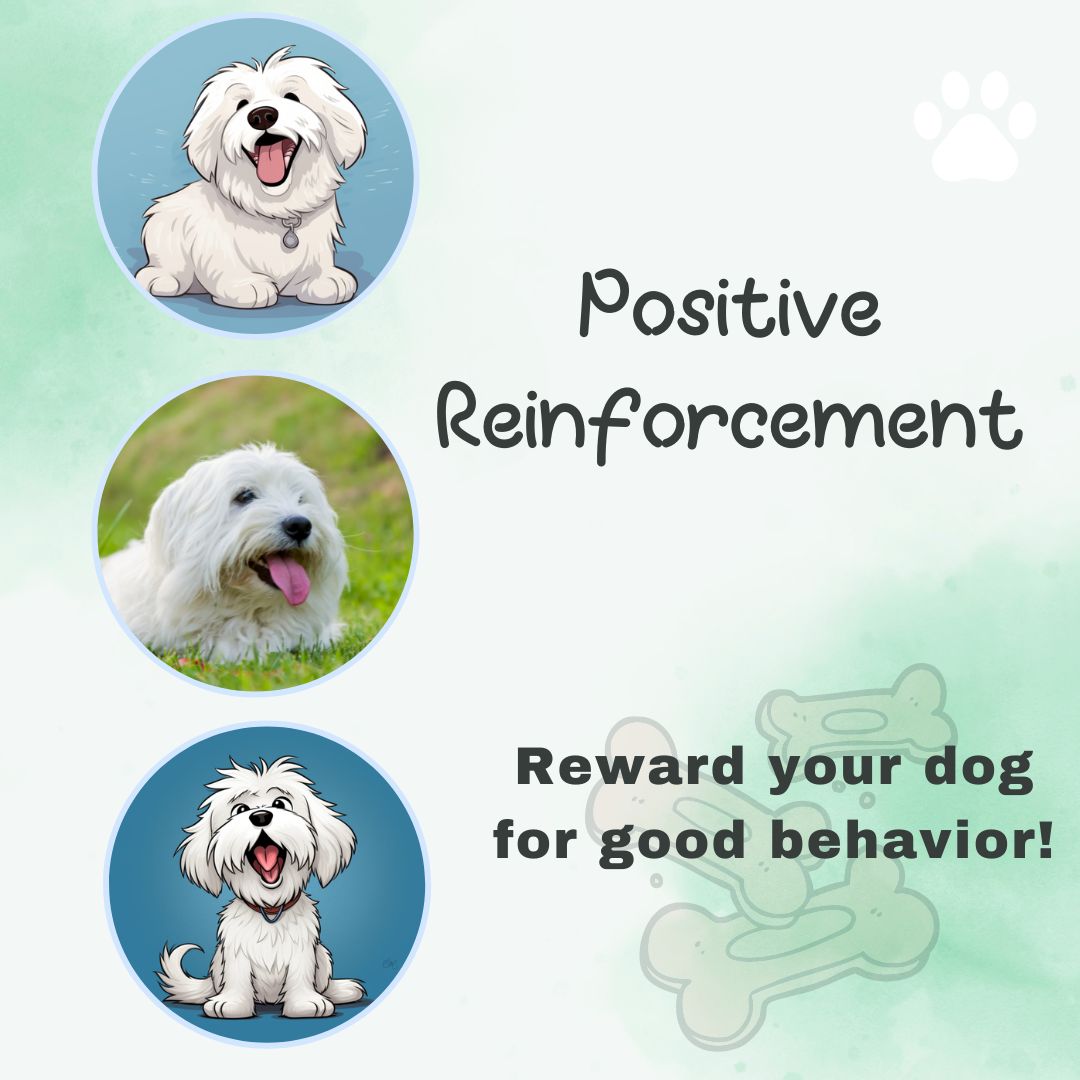
Positive reinforcement is a powerful and popular method for modifying dog behavior, and it's an approach that small dogs like the Coton de Tulear respond exceptionally well to. This method is about catching your dog in the act of doing something right and rewarding them for it. It could be a delicious treat, a belly rub, or a heartfelt "Good girl!" This method encourages the desired behavior and strengthens the bond between you and your dog.
Whenever your dog does something you like—maybe they sit on command, refrain from chewing your favorite shoes, or simply wag their tail at you with pure joy - that’s when you seize the moment and shower them with rewards, treats, and praise! This is positive reinforcement in action.
The idea behind positive reinforcement is simple yet profound. By rewarding your dog for exhibiting desired behaviors, you're teaching them that good things happen when they behave in a certain way.
Timing is crucial, and the reward should be given immediately after your Coton performs the desired behavior so that they can make a clear connection between their action and the positive consequence. For example, if you're teaching your dog to "sit," reward them with a tasty treat immediately after they plop their cute little butt on the ground.
Consistency is also crucial. By repeatedly rewarding the desired behavior and ignoring or redirecting unwanted behaviors, you're helping your Coton understand what's expected of them. This repetition helps reinforce the behavior and strengthens the neural pathways in their brains.
When choosing rewards, find out what really gets your Coton's tail wagging! For some Cotons, treats are the ultimate motivator, while others may prefer a belly rub, a play session, or verbal praise. Discover what brings that sparkle to your Coton's eyes and use it as their special reward during training sessions.
One fantastic aspect of positive reinforcement training is that it creates a positive and enjoyable experience for both you and your dog. It fosters a bond based on trust, cooperation, and mutual understanding. Your Coton will come to see training sessions as fun and rewarding, eagerly anticipating the chance to show off their new skills and earn those tasty treats or belly rubs.
Remember, though, that this training isn't just about rewarding the good—it also involves ignoring or redirecting unwanted behaviors without resorting to punishment or harsh methods. By focusing on the positive and redirecting their attention to more appropriate behaviors, you can help your Coton understand what's expected of them without causing stress or fear.
Counterconditioning is another mighty weapon in the behavior modification toolkit. Does your Coton get anxious every time a stranger approaches? With counterconditioning, you can change their emotional response to that situation by pairing it with something positive. Treats, playtime, or a favorite toy can work wonders in creating a positive association.
Counterconditioning focuses on changing your dog's emotional response to a feared stimulus by pairing it with something enjoyable. It aims to replace negative emotions with positive or neutral ones.
This differs from positive reinforcement, which rewards desired behaviors without addressing the emotional response. Counterconditioning often involves gradual exposure and pairing the trigger with pleasurable experiences. Positive reinforcement, on the other hand, reinforces desired behaviors. Both techniques can be used together for effective behavior modification.
Desensitization, on the other hand, involves gradually exposing your Coton to the fear-inducing stimulus in a controlled and safe manner. Starting with a low-intensity version of the trigger and slowly building up can help your Coton become less reactive over time. So, if your Coton's nemesis is the dreaded vacuum cleaner, start with them in a separate room and gradually introduce them to the sight and sound at a distance. Pairing this with counterconditioning techniques is usually a recipe for success.
I was fortunate that Lucy’s breeder started desensitization in her first 10 weeks of life. She became accustomed to living in a home with noise (kids, other pets, many visitors, vacuum cleaners, and they even played recordings of thunder and fireworks.)
I can’t tell you how invaluable that desensitization was. Today, Lucy rarely blinks at fireworks, thunder, vacuums, or people coming in and out of the house. It was very different for my dog, Luc, who did not have the benefit of this type of training. He was afraid of everything when I got him, and it took a lot of time and effort to make him feel safe.
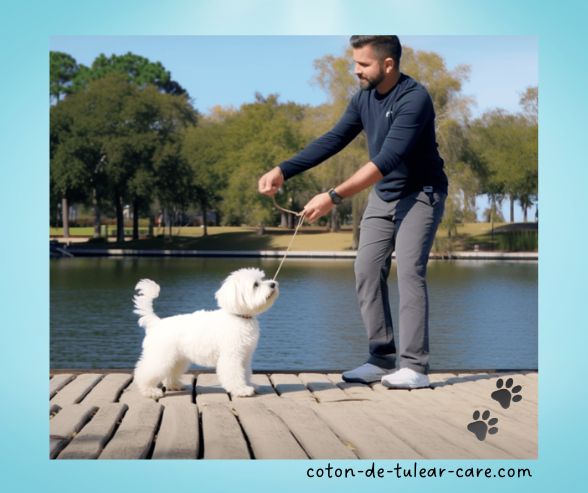
When is it time to seek professional help?
Knowing when to seek professional help is crucial for addressing complex or persistent behavior issues in your Coton de Tulear - or any dog. Here are some signs that it's time to consult a professional:
- Severity: If the behavior problem is severe, such as aggression towards people or other animals, or if it poses a risk to your dog or others, it's best to seek professional guidance.
- Persistence: If the behavior problem persists despite your efforts to address it through training and behavior modification techniques, it may require a professional's expertise.
- Safety: If the behavior problem poses a safety risk to you, your family, or your Coton, it's important to seek professional help to ensure everyone's well-being.
- Deterioration: If the behavior problem worsens or affects your Coton's quality of life, seeking professional assistance can help prevent further escalation.
So, how do you find good professional help?
- Research: Look for certified dog trainers or behaviorists specializing in positive reinforcement training and behavior modification. Seek professionals with experience working with Cotons or other small breed dogs.
- Recommendations: Ask friends, family, your vet, or local dog owners' groups for recommendations. Personal referrals can provide valuable insights into the effectiveness and reputation of a professional.
- Credentials and Certifications: Check for certifications and credentials such as Certified Professional Dog Trainer (CPDT), Certified Behavior Consultant Canine-Knowledge Assessed (CBCC-KA), or Certified Applied Animal Behaviorist (CAAB). These indicate a level of expertise, education, experience, and commitment to ethical training practices.
- Consultations: Schedule consultations with potential professionals to discuss your Coton's behavior issues, training philosophy, and methods they employ. This will help gauge their knowledge, experience, and compatibility with your goals.
- Observation: If possible, observe the professional in action. Attend their training classes or watch them during a behavior consultation to see if their approach aligns with your preferences and if they work well with dogs and their owners.
- Reviews: Check business websites and social media to make sure their reviews are positive.
There are online resources if you can't locate professional behavior modification services. One of my favorite lesser-known solutions for behavior issues is the Trust Technique. You can try it out for free, and it is very unique and special. When Lucy started having seizures, she was extremely anxious, and her stress would cause more seizures. The Trust Technique helped me calm her down and feel safe. I can’t recommend this technique enough if you have a fearful dog. Have you tried this technique? I’d love to hear about your experience. I wish more people knew about it!
As with all dog training, patience and consistency are the secret sauce to successful behavior modification. It's not an overnight process, and it's important to set realistic expectations. The key is to maintain consistency in your training routines, provide a structured environment, and shower your Coton with heaps of love and positive reinforcement along the way.
To wrap it all up, understanding and modifying dog behavior is the gateway to a happy and well-behaved dog. So, embrace the journey, be proactive in addressing behavior issues, and don't hesitate to seek professional guidance when needed. The bond you'll build with your Coton de Tulear through effective behavior modification will be a reward beyond measure. Happy training!
Get answers to your dog behavior questions. Just click on each behavior to learn more.
Housetraining:
This is the number one concern for all new puppy owners. The Coton
de Tulear is pretty smart gets the gist of house training or (crate training) relatively quickly.
Chewing:
While chewing is not an inherent trait of the Coton, it's fairly
common behavior in puppies. Find out how my dog Luc overcame his
chewing problem.
Barking: The Coton de Tulear is a pretty good watch dog and they often don't appreciate strangers coming into their home. But do you know what to do when barking becomes out of control?
Separation Anxiety:
I get a great deal of mail about this subject. This can be a
heartbreaking problem, but it’s definitely something that can be
conquered.
Leash Pulling:
Going for a walk with your dog can be such a fun and happy
experience, UNLESS your dog isn’t trained properly on how to walk with a
leash.
Biting: Learning how to stop puppy biting from becoming a real problem is important. While biting and nipping are common in young puppies, teaching your dog that biting is inappropriate is essential.
Fear issues (storm phobia):
Is your pet afraid of thunderstorms or loud noises? Don’t worry; a
few changes can turn your puppy into a calm, happy, stress-free dog.
Aggressive Dog Behavior: This behavior is not breed specific and ANY breed can exhibit aggressive behavior. The important thing is to stop aggression before it becomes a serious problem.
Do you have a dog behavior modification question? Click Here to Ask Your Question

Home | About Me | Contact Me | Privacy Policy |Disclosure
Copyright© 2008- All Rights Reserved
Share your Coton Stories & Photos Here


Did you get the book, Meet the Cotons, yet?

Recent Articles


-
Shiloh the little thief
Apr 05, 24 07:50 AM
 Shiloh is 8 months old and has made all of our lives a little brighter. We lost my Dad last year and the grief overwhelmed all of us. I thought we would
 -
Teeth cleaning
Apr 03, 24 01:30 PM
What is the best toothpaste to use? What about the teeth cleaner you put in their water? -
Dark brown eye staining
Mar 26, 24 10:43 AM
My coton is almost 5 years old and for the past year she has had terrible brown eye staining. The vet says it is allergies but it never gets better even
Sign up for your free Newsletter
You will also receive 10 Things Every Coton Parent Should know (answers to the most commonly asked questions about the breed).