

Learn the Do's and Don'ts of
Treating Puppy Separation Anxiety
Does your new Coton de Tulear have puppy separation anxiety? Do you know the best way to treat separation anxeity in dogs? Not sure whether to use dog behavior modification training, crate training, medication, or even doggy yoga? This is a common, yet preventable and treatable problem.
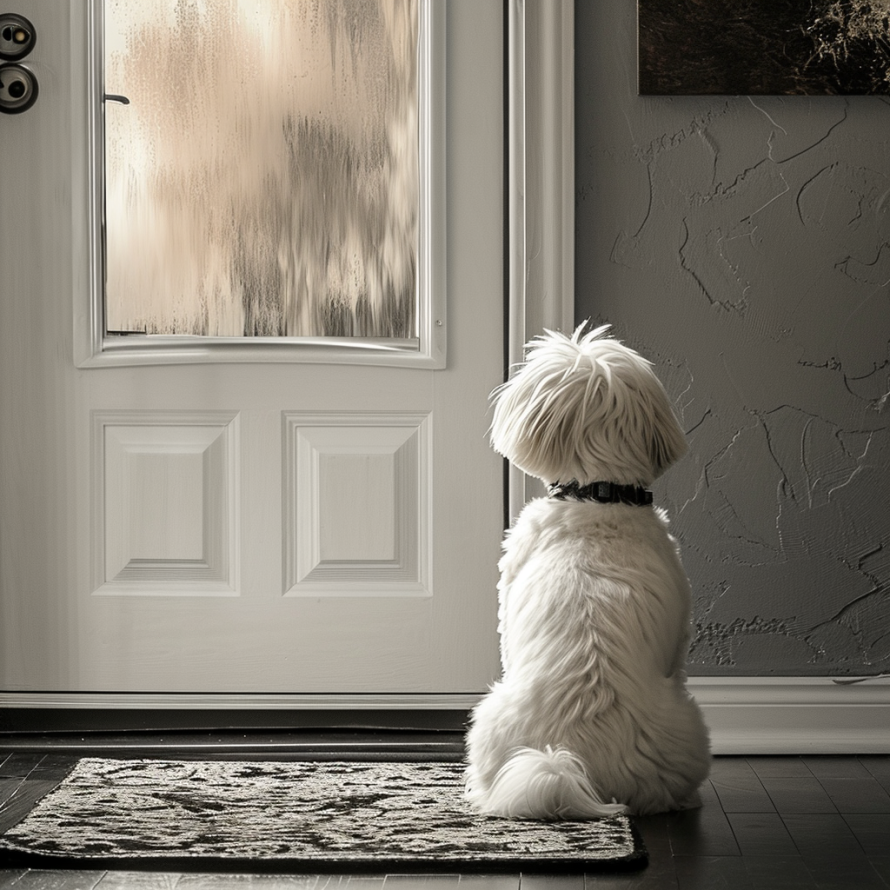
Does this sound familiar? You’re heading out the door and your dog isn’t having any of it. He cries, he whines, he barks, he gives you that look that melts your heart into a thousand pieces.
Then when you come home you find he’s got laryngitis from barking all day, and he’s destroyed your expensive throw pillows and 2 pairs of shoes.
Ruh Roh! Now What?
What are the symptoms of separation anxiety in dogs? If your dog is exhibiting signs of severe pet anxiety, the first thing you should do is see your veterinarian to ensure that there are no physical reasons for your dog’s behavior and symptoms.
Is your dog exhibiting any of these classic signs of puppy separation anxiety?
- Whining
- Pacing
- Digging
- Excessive drooling
- Barking or howling
- Hyperactivity
- Scratching
- Chewing
- Potty training issues
- Destructiveness
If so, what do you do? What is the best way of treating puppy separation anxiety? Unfortunately, there isn’t one method that works best for all dogs. Some breeds, like the Coton de Tulear, are more prone to this problem than others and may need more than just some basic training.
But there are several methods that have been proven to be successful in treating or preventing puppy separation anxiety:
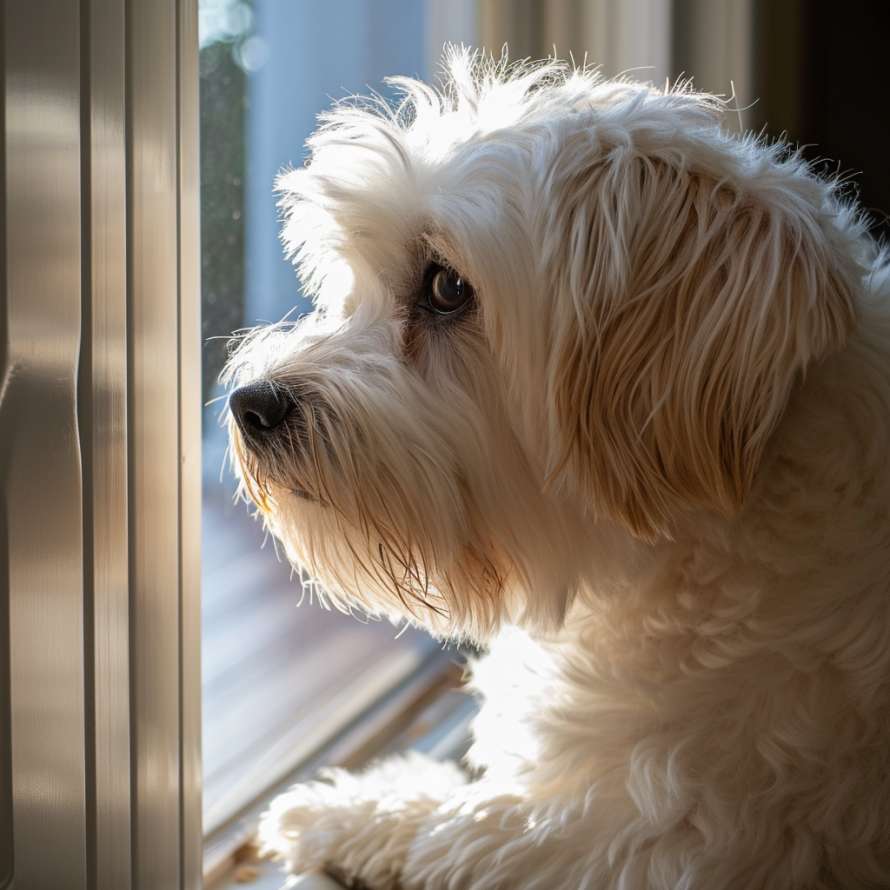 Don't leave me!
Do’s:
- Leave him alone for short little breaks at first so he gets used to
it little by little. You can start leaving the house numerous times a day for as little as 20 seconds at a time. The sooner you start doing this, the better. Vary the times of day and switch doors if you can; go out the front door, the back door, or through the garage.
Gradually increase the amount of time you leave him alone. He will
start to understand that when you leave, you ALWAYS come back.
- When you are home with him, make it quality time. Play with
him, take him for long walks, and just let him hang out with you and
your family.
- Provide interesting toys and treats for him to play with so he won’t get bored while you’re gone.
- Give your dog lots of exercise before you leave. It's been proven that dogs who get lots of activity are more calm and content.
- If exercise isn't an option before you go out, try mental
exercise like obedience training. A 10 minute training session can have
the same effect.
- Some dogs calm down by listening to classical music.
Experiment with different kinds of music to see if your dog responds
positively. Turn on the radio, YouTube, or use an App like Relax My Dog.
- If your dog is crate trained, you may want to leave him in the crate where he will feel safe and calm. You can also leave him in a small room in the house with a baby gate.
- Try herbal remedies like Rescue Remedy that calm and sooth your dog's anxieties.
- Train your dog properly to ensure that they can handle all kinds of experiences, including being left alone.
- Anxiety wraps have been helpful when used in conjunction with other behavior modification techniques. There are several kinds on the market and people have mixed results with them. To get the best results, you should put on the wrap or cape when your dog is calm; not when he's having a full blown anxiety attack. Also, this is not an overnight miracle - sometimes it takes weeks to see changes in behavior. The best results come from using anxiety wraps in addition to other behavior modification techniques.
Don’ts:
- Don’t isolate your dog by keeping him in a room locked away from the
rest of the family. If you keep him in a crate, keep the crate in the
room with you.
- Never use punishment for puppy separation anxiety symptoms; it will only exacerbate the problem.
- When you leave the house, don’t make a huge deal of it by
giving him lots of extra hugs and attention. Just be relaxed and
casual. Your dog picks up on your anxiety, so if you are cool an calm, your puppy will likely be calm as well. Play it cool when you return to the house as well. I know you love when he misses you and jumps all over you, but it's better to ignore him when you first walk in the door. After a few minutes when he's calm, you can give him all the affection you want.
- Don’t leave your dog alone for very long periods of time. Dogs like the Coton de Tulear are not meant to be alone for long periods of time. If you work full time, there are all kinds of options available to ensure your dog thrives while you're away, such as pet sitters, doggy daycare, bringing your dog to work with you, or having friends or neighbors care for him while you're gone.
Help for Severe Puppy Separation Anxiety
Puppy separation anxiety can usually be overcome by incorporating one or more of the suggestions above, but what if you're dealing with severe canine separation anxiety? What if your dog is harming himself or destroying your home and nothing you've tried is working?
Don't give up!
The difference between success and failure is often persistence and consistent practices. Sometimes you may try something for a week without seeing any results and then just stop. Often, with severe cases of dog anxiety, it can take weeks or even months to turn this behavior around, so don't give up too soon.
- You may also have to try a combination of behavior modifications and anti-anxiety medication. Your vet can prescribe medications to help alleviate the anxiety. As with everything else, this is not an overnight solution. It may take weeks to see results and you may have to experiment to find the best drug and dosage.
- A behaviorist or trainer specializing in behaviors like puppy separation anxiety can help.
- Desensitization techniques can help turn around unwanted behaviors. One of the most common technique is to desensitize your dog to your departures from the house. You dog recognizes your leaving behaviors - putting on your shoes, putting on your coat, and grabbing your keys or purse. Try doing these things during the day without leaving the house.
- Make his environment as inviting as possible while you're gone. Leave treat-filled dog toys like the Kong or Pupsicle, put soothing music on the radio, put a shirt of yours in his room for comfort, keep a light on, and make sure his area is safe.
- Teach your dog independence; you don't want to encourage your dog to be glued to your hip. This doesn’t happen overnight - it requires patience and consistence.
See what our visitors have to say about puppy separation anxiety
See what products visitors recommend for dog anxiety
Return to Dog Behavior Modification

Home | About Me | Contact Me | Privacy Policy |Disclosure
Copyright© 2008- All Rights Reserved
Share your Coton Stories & Photos Here

Recent Articles


-
Shiloh the little thief
Apr 05, 24 07:50 AM
 Shiloh is 8 months old and has made all of our lives a little brighter. We lost my Dad last year and the grief overwhelmed all of us. I thought we would
 -
Teeth cleaning
Apr 03, 24 01:30 PM
What is the best toothpaste to use? What about the teeth cleaner you put in their water? -
Dark brown eye staining
Mar 26, 24 10:43 AM
My coton is almost 5 years old and for the past year she has had terrible brown eye staining. The vet says it is allergies but it never gets better even
Sign up for your free Newsletter
You will also receive 10 Things Every Coton Parent Should know (answers to the most commonly asked questions about the breed).